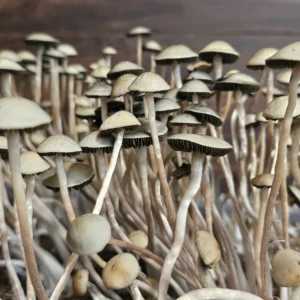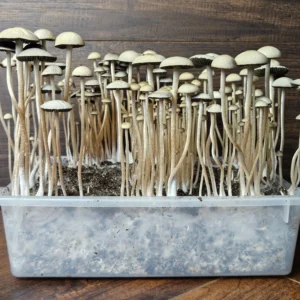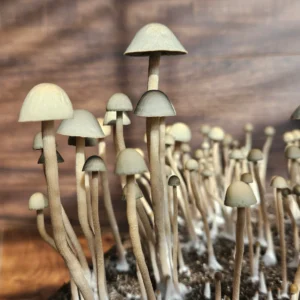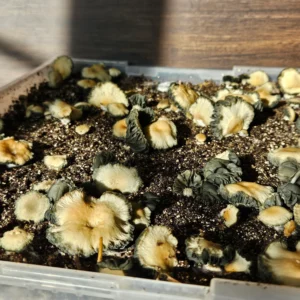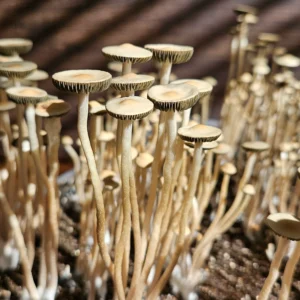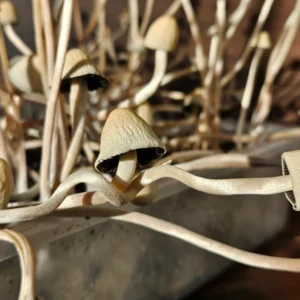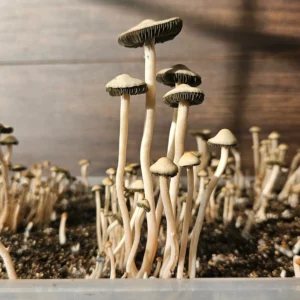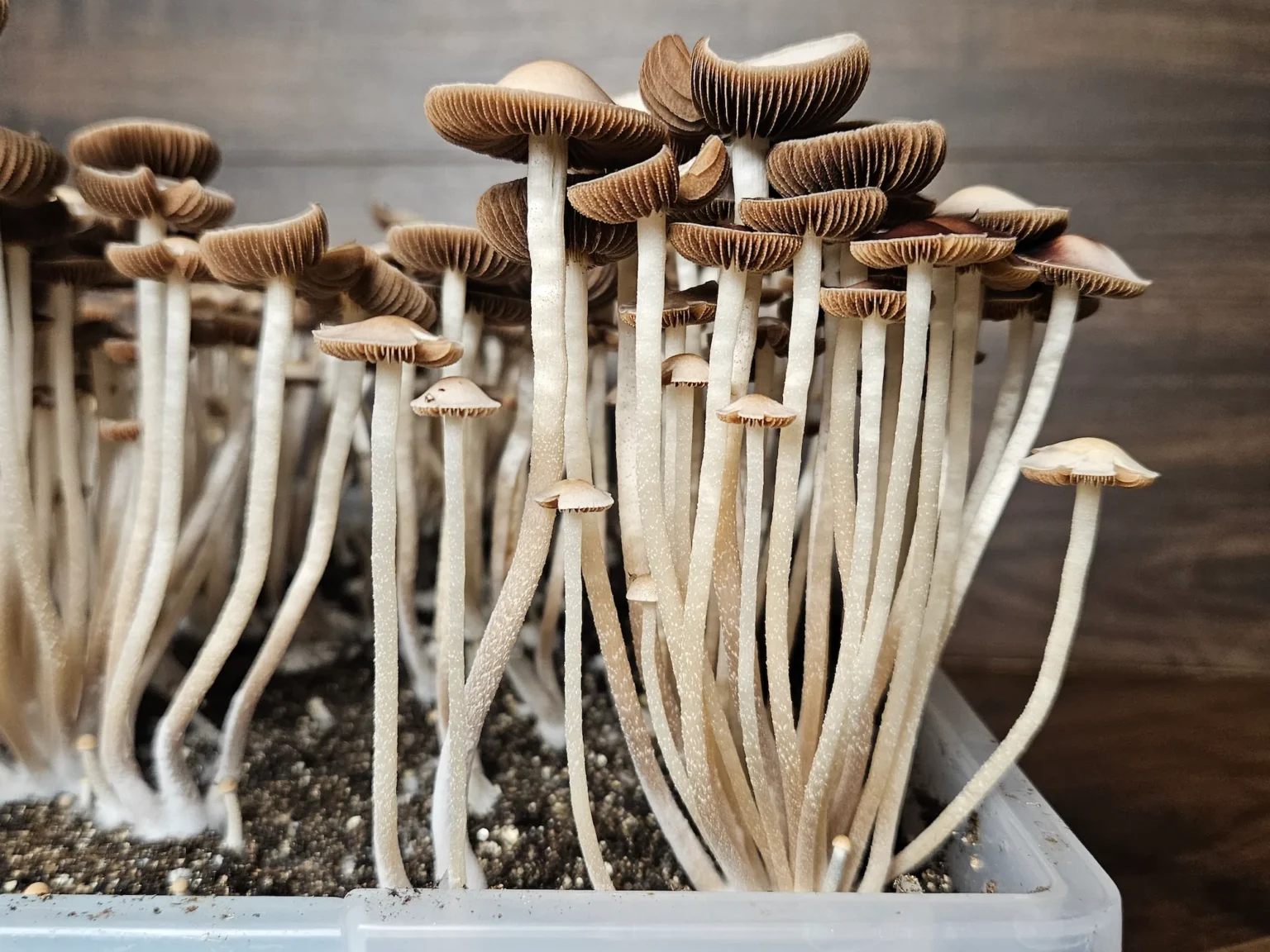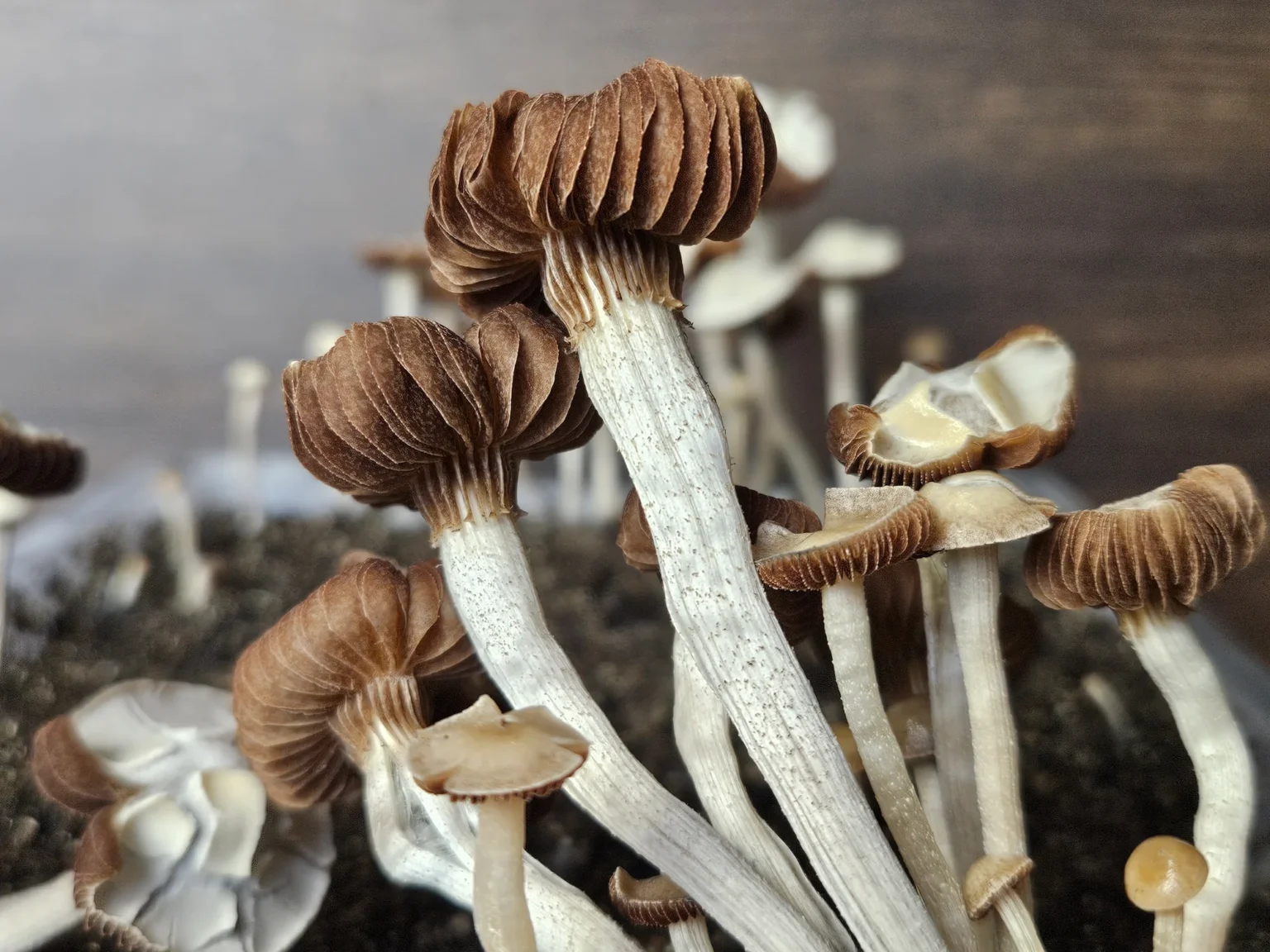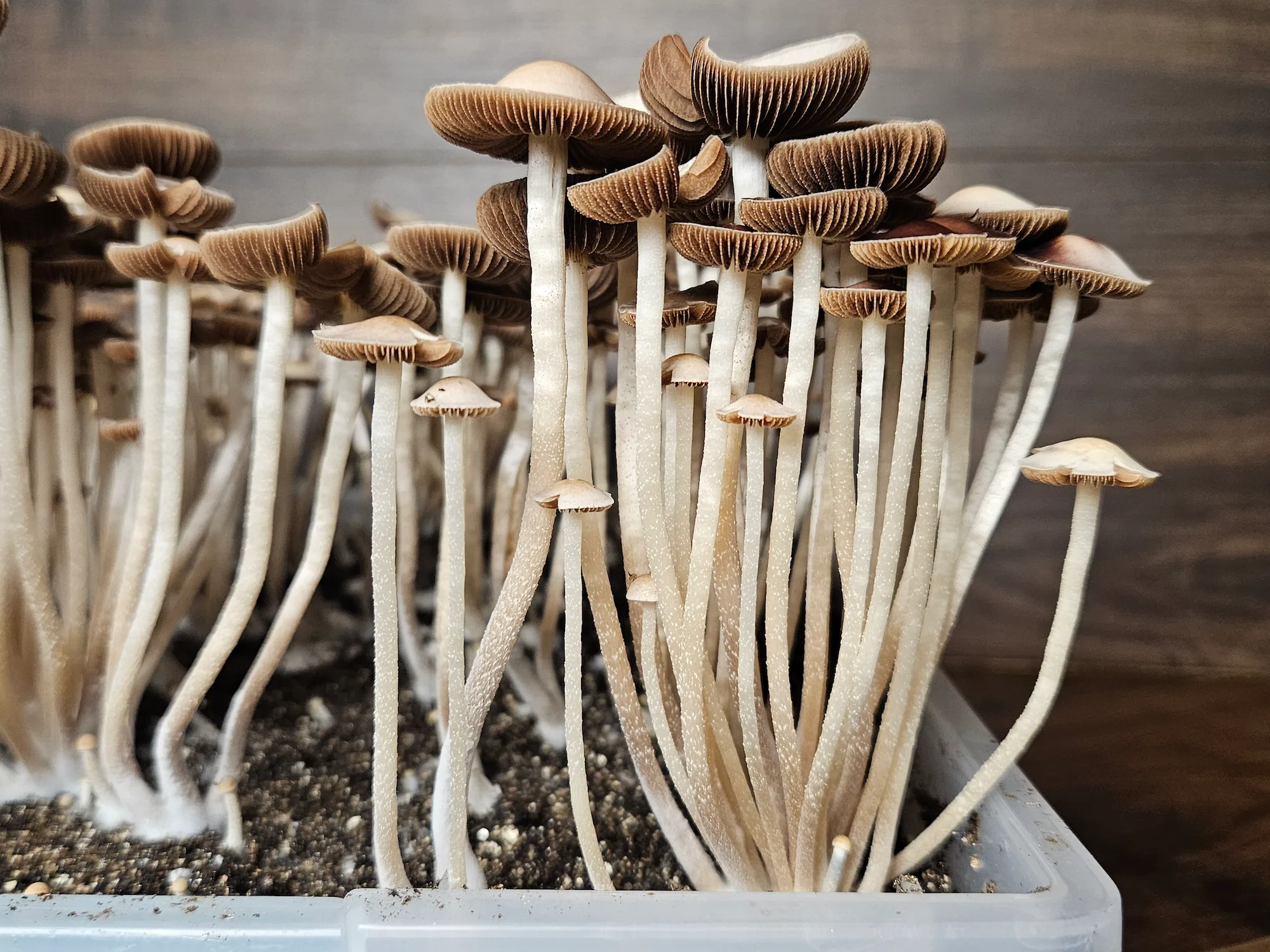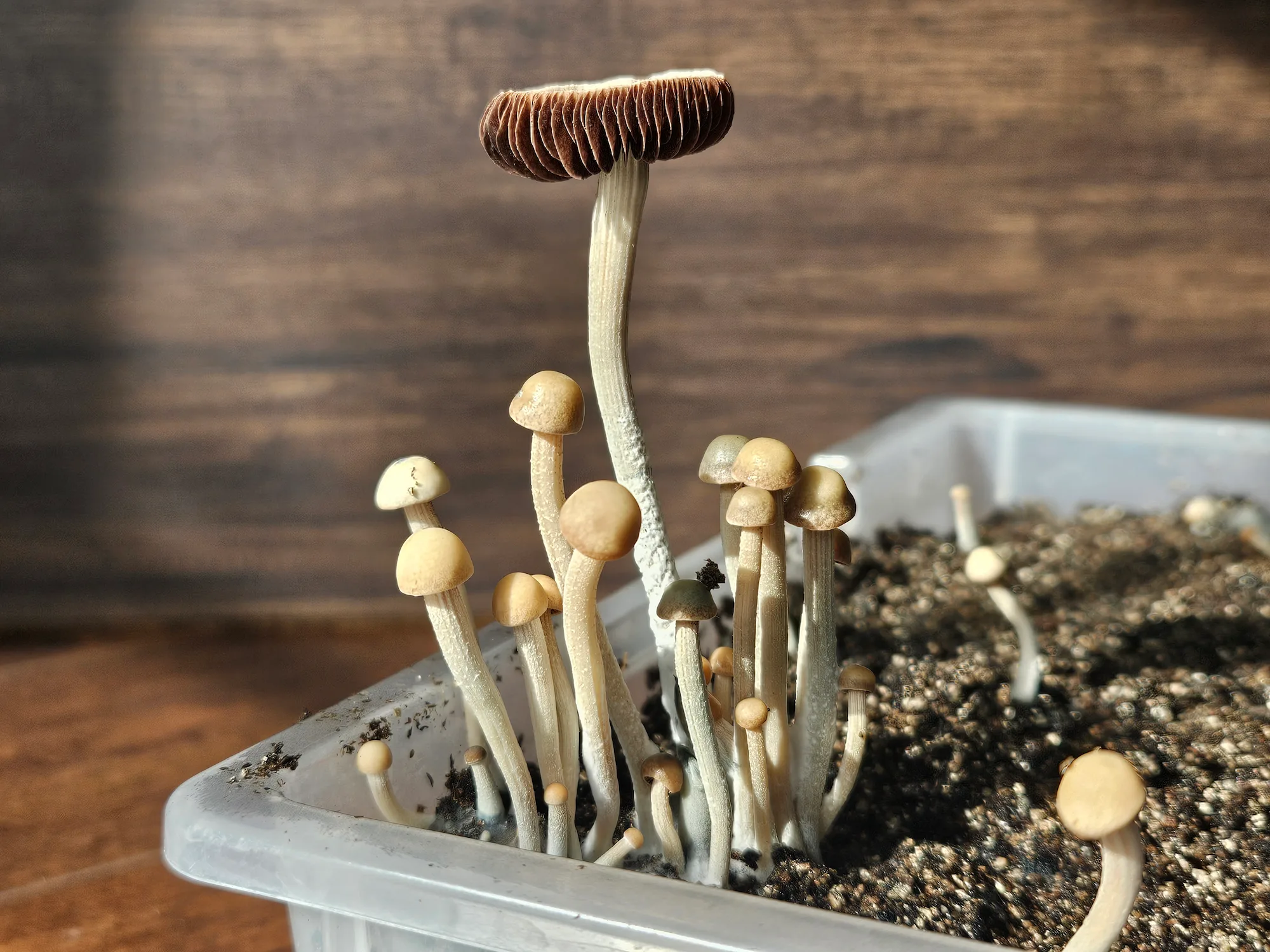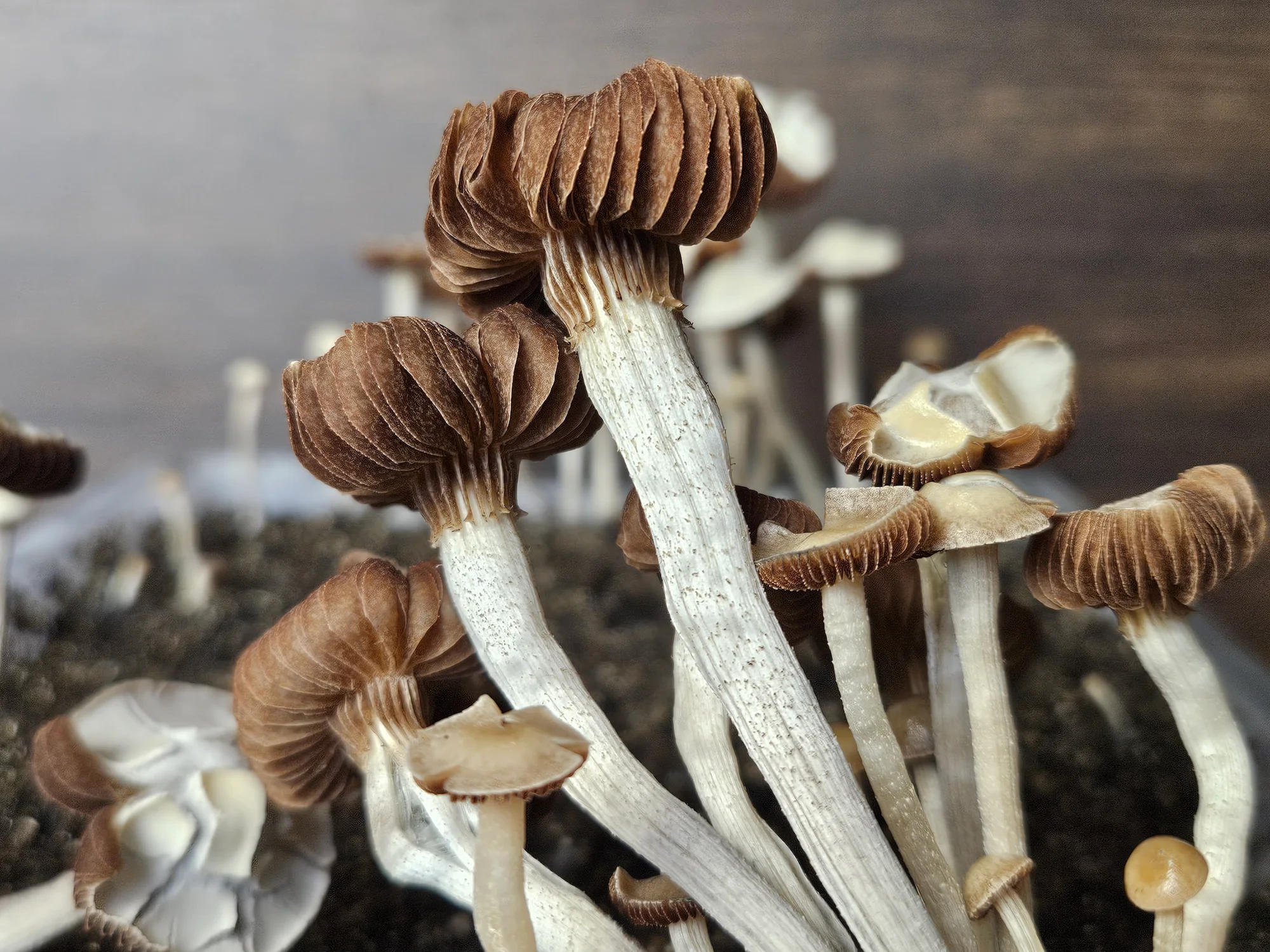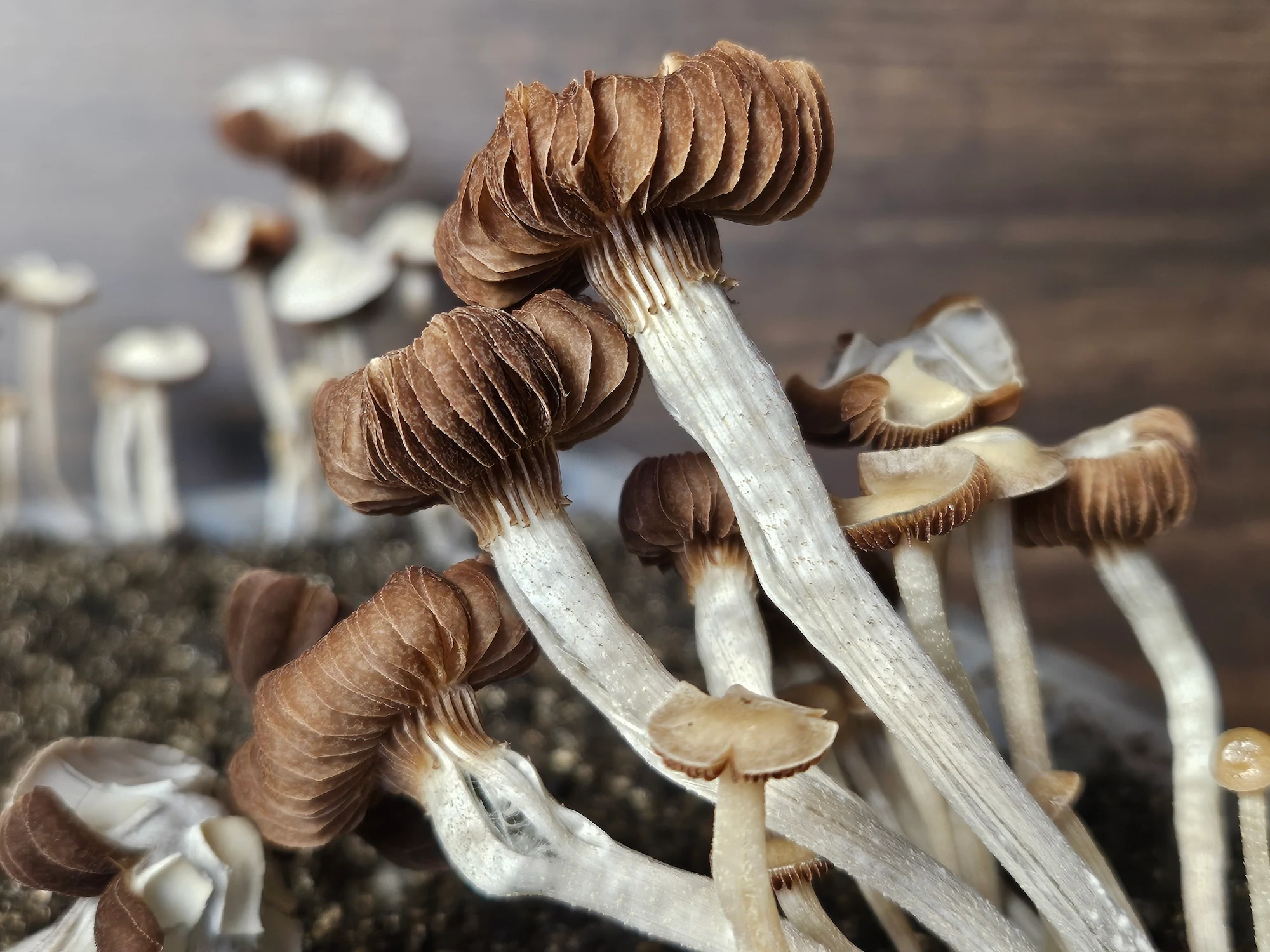

Eungai is a red spore variety that was foraged by SporeExchange on the coast of NSW, Australia. It’s identified as a Panaeolus cyanescens, but it has some unique traits that welcome further research from the community. When young, the fruit look more like P. zapotecorum, with their sharp angles and fibrous, textured stipes. This rigid structure becomes even more apparent as the caps open. Unlike most Pans, where the gills are flexible and barely touch the stem, the gills on Eungai are stiff and physically fused to the top of the stipe. As the cap tries to expand, these gills act like structural cables that refuse to stretch, creating visible “tendrils” at the apex.
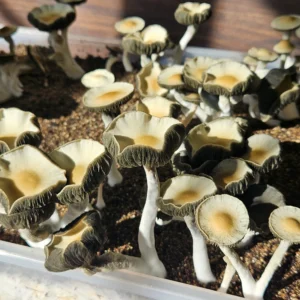
As the fruit matures, the caps begin to round out, but because the tissue isn’t as malleable as typical cyanescens, the tension forces them to fold in on themselves like a “taco” similar to P. subtropicalis. It’s also worth noting that this variety prefers higher than normal RH and the cooler end of the temperature scale. While most Pans thrive in the 80–85°F range, Eungai does best in the mid-70s and will actually start to abort if the environment exceeds 80°F.
What’s included: Each order includes 1-3 prints, carefully wrapped in sterilized foil. Prints can last several years if stored in a dark, dry, and cool location such as your fridge.
Bundle & Save: This variety is also available in the 6 Pack Panaeolus Spore Prints Bundle Deal. Buy any 5 Panaeolus prints and get the 6th free!
Satisfaction Guarantee: I care about your happiness. If you’re not satisfied for any reason, just email me at support@panaeoluscoop.com and I’ll make it right.
$20.00
Genus: Panaeolus
Species: P. cyanescens (aka Pan cyan, Copelandia, Blue Meanie)
Strain Origin: Eungai, NSW, Australia (Pacific Coast). Wild find by Jake Oncid.
Climate: Tropical and subtropical
Habitat: Thrives in nutrient-rich soil, commonly found in pastures, grasslands, and areas fertilized by livestock manure.
Temp: 75°–79°F (24–26°C)
Relative Humidity: 90%–95%
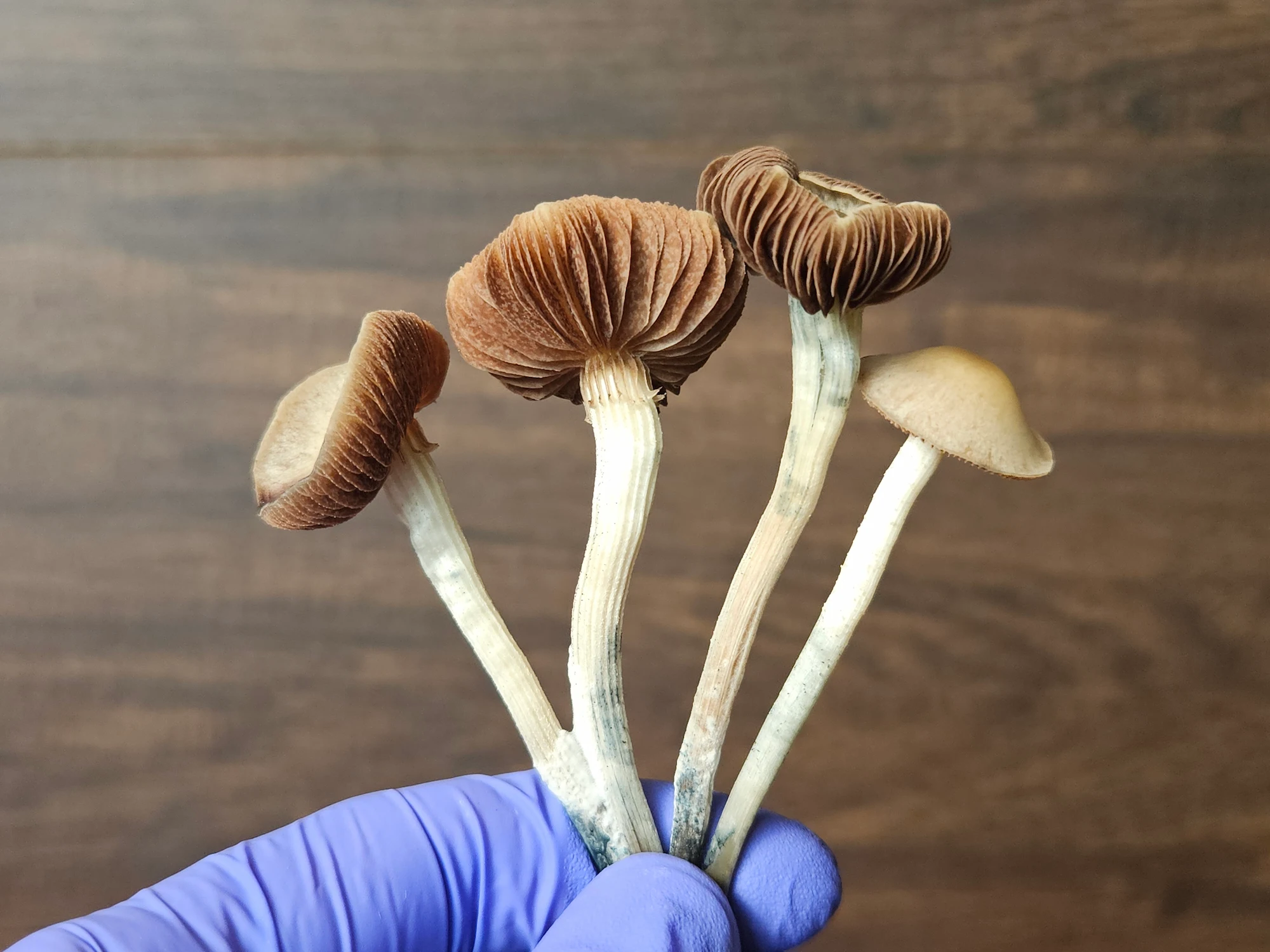
Cap: Medium-sized (2–5 cm diameter), initially conic with sharp, acute angles before expanding into a broad bell shape. Color starts out a light, golden honey and transitions into a silvery-grey. The tissue is exceptionally rigid and lacks the malleability of typical cyanescens, which often causes the caps to crack or buckle as they expand.
Stem: Structurally robust and thicker than typical Panaeolus varieties, ranging from 8–13 cm long. The stipes are fibrous and striate with a gnarled, “woody” texture. The most defining feature is the prominent costate ribbing (tendrils) at the apex where the gills are physically fused to the stem. It bruises a vivid blue/black almost instantly when handled.
Gills: Stiff and structurally rigid, attached directly to the stipe. They transition from terracotta into a to a dark rusty brown as the spores mature.
Spores: Dark reddish-brown. This is a stable Red Spore (RS) mutation.
Growth Characteristics: Sensitive to environmental stressors; it requires higher than normal relative humidity and it performs best on the cooler end of the temperature scale (mid-70s), with a tendency to abort if temperatures exceed 80°F.
Notes: Thrives in environments with stable temperatures, balanced humidity, and consistent airflow.
Potency: Psilocybin content typically ranges between 2%–4%.
Thank you staff you bring me the best genetics in the world .SOOOOO COOL 😎

You must be logged in to submit a review.