

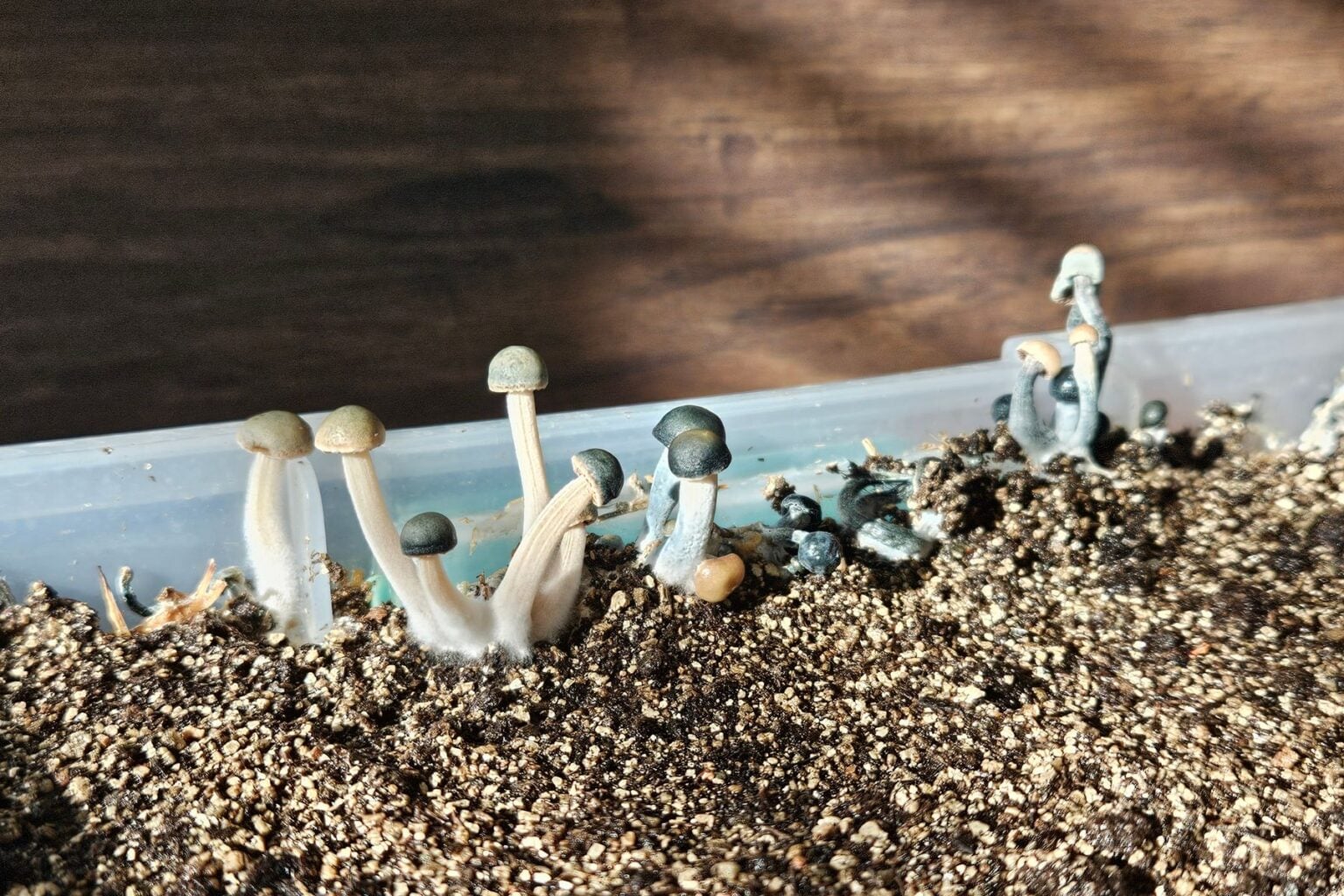
If you’ve ever watched your mushrooms start aborting for no clear reason, you know how frustrating it is. Everything looks fine: clean substrate, healthy mycelium, correct temp and RH… but they keep stalling out and aborting before maturity. Why?!
It can be hard to tell, especially if you’re new to mushroom cultivation. There’s always a reason though, and the goal of this post is to help you learn how to read the signs early, so you can fix the issue before it’s too late.
Fruiting Environment by Species
Before we get into the different causes, I want to go over the ideal fruiting conditions for each species so you have a baseline to check your symptoms against.
Panaeolus Species
- Climate: Tropical and subtropical
- Habitat: Found among tall grasses in manure-rich pastures, usually after heavy rains
- Temperature: Will fruit between 75–85°F (24–29°C), with a sweet spot around 77–83°F (25–28°C)
- Relative humidity: 90–95% before pinning; 86–92% as fruits mature
- Nuanced differences: Pans need a gentle, stable environment with abundant fresh air. They’re sensitive to stagnant air, harsh breezes, and sudden swings in humidity or temperature. They’re also less aggressive than other species and don’t hold up against competition very well, so a strong, healthy culture is important.
Psilocybe Cubensis
- Climate: Tropical and subtropical
- Habitat: Nutrient-rich fields, grasslands, and pastures fertilized by livestock manure.
- Temperature: 74–80°F (23–27°C)
- Relative humidity: 85-95%
- Nuanced differences: Cubes are very easy to work with — hardy, forgiving and fast growing. They tolerate less than ideal conditions well and are a great species for beginners.
Exotic Psilocybe Grasslovers
Includes species such as Tampanensis, Mexicana, Ochraceocentrata, Natalensis and Subtropicalis.
- Climate: Tropical and subtropical
- Habitat:
- Tampenesis: Typically found in sandy soils, grasslands and meadows, around decaying organic matter.
- Mexicana: Grassy fields and meadows along forest edges, often growing from rich soil with decomposing organic matter.
- Nats/Ochra: Grasslands, meadows, and lightly forested areas, growing from nutrient-rich, organic soils.
- Subtropicalis: Typically found in grasslands, pastures, and along woodland edges in nutrient-rich soils near decomposing plant material.
- Temperature: 74°–80°F (23–27°C)
- Relative Humidity: 85%–95%
- Nuanced differences: These species tend to fruit densely, so a higher spawn to substrate ratio (e.g. 1:8 instead of 1:4) can help prevent crowding. Like Pans, they thrive with abundant FAE and dislike stale or CO₂-heavy environments.
Exotic Psilocybe Woodlovers
Includes species such as Zapotecorum and Niveotropicalis.
- Climate: Neotropical and subtropical
- Habitat:
- Zapotecorum: Shaded leaf litter, mossy areas, and decomposing woody debris — typically in mountainous regions.
- Niveotropicalis: Sandy soils that are rich in woody debris, garden mulch, or flood-prone areas.
- Temp: 65–75°F (18–24°C)
- Relative Humidity: 90%–98%
- Nuanced differences: These species prefer cool, shady, consistently moist environments that are protected from direct sunlight.
Master Chart by Symptom
In a hurry? Here’s a chart organized by symptom. Once you find what you’re seeing in your grow, scroll down to that section for more info and how to fix it for both tub and greenhouse setups.
| Symptom | Most Likely Cause(s) |
|---|---|
| Pins stall or abort shortly after forming | Low Humidity, High CO₂, Dry Substrate, Overpinning, Harsh Fan Exposure, Contamination, Weak Culture |
| Pinning around the edges only | Low humidity |
| Thin, weak stems that can't sustain their weight | Low Humidity, Dry Substrate, Overpinning |
| Dry, wrinkled caps | Low Humidity, Harsh Fan Exposure |
| Stalled growth mid-flush | Dry Substrate |
| Hollow stems | Dry Substrate, Nutrient Depletion |
| Fuzzy Feet, short, stocky stems | High CO₂ |
| Deformed or fused fruit, underdeveloped caps | High CO₂ |
| Drooping or wilted fruit | High CO₂, Harsh Fan Exposure |
| Tall, leggy fruits with tiny caps | Low Oxygen |
| Sudden widespread abortions | Temperature Swings, Harsh Fan Exposure, Overpinning |
| Localized abortions | Contamination, Harvest Damage |
| Weak pinset, few scattered fruit | Contamination, Weak Culture, Nutrient Depletion |
Low or Fluctuating Humidity
What This Looks Like
- Pins abort shortly after forming
- Pinning around the edges only
- Caps dry out and wrinkle around the edges
- Stems are thin and weak, can’t sustain their weight
- Caps develop little or no spores
Why It Matters
Mushrooms are about 90% water. If the air gets too dry, even for just a few hours, it can kill off an entire flush. Panaeolus and exotic Psilocybes are especially sensitive during pinning.
How To Fix It
Greenhouse Grows: While it’s possible to maintain RH by cycling your fans and keeping temps stable, most people prefer to use a controller such as AC Infinity or Inkbird. It costs a bit more up front, but requires far less energy to manage. I like to keep RH around 90–95% during colonization, and then for Pans, bump it down to 86-90% as fruits mature.
Humidity can vary a lot between shelves, so I recommend placing a hygrometer on each one until you’ve got your set up dialed in. I also like to clip a mini fan directly under the humidifier’s stream of water so it breaks it up and spreads it evenly around the greenhouse.
Tub Grows: If your substrate is deep enough, hydrated to field capacity, and your FAE holes are in the correct place, the tub should maintain enough RH to carry you through your first flush. If the condensation has started evaporating, partially covering the FAE holes and misting the substrate and walls should bring the RH back up.
Lack of Moisture in Substrate
What This Looks Like
- Substrate feels dry, and begins pulling away from the edges
- Fruit stalls mid growth
- Fruits grow but stems are weak or hollow
Why It Matters
Humidity in the air isn’t enough on its own, mushrooms draw a large portion of their water directly from the substrate. If that moisture runs out or becomes inaccessible (due to compaction or shrinkage), fruits may stall mid-growth, feel hollow, limp, or abort. Even with perfect RH, dry substrate can bring your flush to a halt.
How To Fix It
If your fruit is otherwise healthy, you can usually fix this by hydrating your substrate.
Greenhouse Grows: I usually mist my trays every other day before pinning to keep the surface moist. Once fruiting begins, I check them daily. Dense flushes soak up water fast.
Exotics like tampanensis and mexicana can handle direct misting. In fact, the love it. Pans, on the other hand, do not. They usually abort if spayed directly so to avoid this, you can use a syringe to hydrate around the fruit.
Tub Grows: If your substrate and tub are dialed in properly, you shouldn’t need to rehydrate until after your first flush. If you notice the sub feels dry or has started pulling away from the walls before then, giving it a good drink and partially covering the CO₂ holes should do the trick. Moving forward, you may want to adjust your hole size, positioning, and sub depth for the next grow.
High CO₂ / Stagnant Air
What This Looks Like
- Fuzzy feet
- Fruits twist, fuse, or grow deformed
- Fruits cluster and grow into each other
- Short, stocky stems with underdeveloped caps
- Fruits droop or wilt even when hydrated
Why It Matters
High CO₂ affects mushrooms at multiple stages. During early development, it disrupts normal cell differentiation, leading to twisting, clustering, and malformed growth. If levels stay elevated, it can also signal the mycelium that conditions are unfavorable for fruiting, stalling development entirely.
How To Fix It
Greenhouse Grows: While Psilocybe species tend to handle stagnant air and higher levels of CO₂ better, Panaeolus species don’t. They need abundant FAE. To provide this, it’s helps to understand how greenhouse physics works. Whether you’re running positive or negative pressure, you want to create a cyclical air flow.

Positive pressure:
- Vent the top and bottom of your greenhouse
- Oscillating fan in the upper corner pointing down so it blows across all shelves
- Second fan goes in the opposite bottom corner, pointing up, directly under the humidifier’s stream of water
- If your humidifier is inside the greenhouse, make sure your second fan is pulling in some fresh air through a vent. If your humidifier is outside the greenhouse, the air it’s pulling in from the room should be enough.

Negative pressure:
- Exhaust fan goes in the bottom corner
- HEPA or passive intake in opposite top corner
- Humidifier gets piped in on the same side as the exhaust (middle shelf), with a mini fan directly underneath, pointing up, to break up the mist and improve RH distribution
For the fan, I’ve found short, frequent cycles work best. You want to think soft steady breezes, not big gusts of wind.
Tub Grows: Since Co2 is heavier than air, you want your FAE holes to be level with your substrate. If you place them above the substrate, it won’t be able to escape until you fan. I’ve found smaller holes work better than larger holes too so it doesn’t dry out your sub.
During colonization, I like to keep the bottom holes covered with 2 layers of micropore tape (one layer on the inside, one on the outside). Once the tub has started pinning, I take off the outer layer of tape from the bottom row and uncover the top holes about half way. As fruits mature, I’ll continue lowering the tape on the top holes until it’s completely off. Once fruits start to mature, a quick fan (30 sec) once or twice a day is usually enough.

Low Oxygen (O₂ Starvation)
What This Looks Like
- Tall, leggy stems with very little mass
- Small caps that fail to fully develop
- Fruits grow sideways or toward FAE holes
Why It Matters
Mushrooms rely on oxygen for cellular respiration, the process that turns stored nutrients into usable energy. Without enough oxygen, they can’t fuel proper growth.
How To Fix It
Greenhouse Grows: Whether you’re running positive or negative pressure, you need to make sure you’re bringing in fresh air and not just cycling humid, stale air. The goal is to create a cyclical air flow that aligns with greenhouse physics.
Positive pressure:
- Vent the top and bottom of your greenhouse
- Oscillating fan in the upper corner pointing down so it blows across all shelves
- Second fan goes in the opposite bottom corner, pointing up, directly under the humidifier’s stream of water
- If your humidifier is inside the greenhouse, make sure your second fan is pulling in some fresh air through a vent. If your humidifier is outside the greenhouse, the air it’s pulling in from the room should be enough.
Negative pressure:
- Exhaust fan goes in the bottom corner
- HEPA or passive intake in opposite top corner
- Humidifier gets piped in on the same side as the exhaust (middle shelf), with a mini fan directly underneath, pointing up, to break up the mist and improve RH distribution
Tub Grows: I like to keep FAE holes covered until the sub is fully colonized. Once pinning has started, lower the tape on the top holes about half way and continue lowering as fruits mature. Towards the end, fanning for 30 sec, once or twice a day is usually enough to provide sufficient oxygen.

Temperature Swings
What This Looks Like
- Sudden widespread die off
Why It Matters
Temperature directly regulates a mushroom’s metabolism. It affects everything from enzyme activity to nutrient absorption to cell division. When temps fall too low, growth slows or stops entirely. When it spikes too high, cells break down or become stressed. Even short swings can send the fruiting body into shock, triggering widespread aborts, especially in sensitive species like Panaeolus cyanescens.
How To Fix It
Greenhouse Grows: Your best defense is prevention. Panaeolus and exotic Psilocybe species have a narrow temperature range in which they thrive. The most reliable thing you can do is dedicate a room to your grow and use a space heater that connects to an external controller (like AC Infinity), to keep it warm. The temp inside the greenhouse can differ significantly from the room itself, so make sure your probe is placed on a shelf inside the tent.
Tub Grows: this usually isn’t a problem with tub grows as these species tend to be hardier and have a wider range of temperature they can tolerate. If it is though, you can follow the same instructions as above.
Overpinning/Overcrowding
What This Looks Like
- You get a dense pinset, but then half abort shortly after
- Fruit that continues to grow is usually small, weak and underdeveloped
Why It Matters
Each mushroom pulls moisture and nutrients from the substrate. When there are too many pins competing for limited resources, the mycelium can’t support them all.
How To Fix It
Varieties like TTBVI, Natalensis and Ochra are notorious for this issue. Once it happens, there’s not much you can do except harvest, hydrate the survivors, and hope the next flush isn’t as dense. Going forward though:
- Use less spawn (e.g. 1 pint instead of 1 quart per 14×9 tray)
- Choose trays or tubs with more surface area
- Maintain good hydration during fruiting to support heavier pinsets
- For tubs, aim for a 1:8 spawn-to-sub ratio instead of the usual 1:4
Harsh Fan Exposure
What This Looks Like
- Dry, shriveled caps
- Freeze-dried appearance, often followed by limp or drooping fruit
Why It Matters
Warm weather mushrooms need a gentle, steady environment. They’re not built to handle harsh conditions and large gusts of dry air can shrivel the caps before the mushrooms have a chance to mature.
How To Fix It
Greenhouse Grows: Use short, frequent fan cycles set on low speed to maintain airflow without drying out your fruit and substrate. If you’re using a second fan for air circulation, make sure it’s not pointing directly at your trays.
Tub Grows: This usually isn’t a problem since fanning is done manually but if you notice your fruit drying out, lower the speed. 30 seconds on the lowest setting, 1–2 times a day is usually plenty.
Harvesting
What This Looks Like
- Young fruit abort after nearby fruits are harvested
- Small clusters abort together after one mushroom is removed
Why It Matters
Mushrooms share a vascular-like connection through the mycelial network. When a fruit is harvested, especially by pulling, it can tear hyphal threads below the surface. This micro-damage doesn’t just affect the harvested mushroom; it can interrupt nutrient and water flow to neighboring fruit, triggering stress responses or aborts in the surrounding area.
How To Fix It
When harvesting near young or clustered fruits, cut the mushroom just above the base of the stem with pruning scissors or a blade instead of twisting, rocking or snapping off. This helps prevent the mycelial network from going into shock.
Direct Misting
What This Looks Like
- Fruits bruise blue and abort shortly after misting
- Water droplets collect on caps, leading to soft spots and stalled growth
Why It Matters
Mushrooms breathe through their skin. Direct water on the caps can clog that exchange, trigger bruising, or create the perfect conditions for rot and contamination, especially for delicate species like Panaeolus cyanescens.
How To Fix It
There’s a saying in mushroom cultivation: “wet feet, dry hats” – which means keep your substrate moist but your fruits dry.
Greenhouse Grows: After pinning starts, mist around the fruit, not directly on them. If the surface isn’t absorbing water, you can use a syringe to inject it instead. Once your trays have started pinning, It’s best to move them away from the stream of the humidifier. For best results, clip a mini fan directly underneath the humidifier so that it breaks up the water and helps keep RH consistent throughout the greenhouse.
Tub Grows: Same strategy. Avoid misting fruits directly. Mist the walls, casing layer, or inject water if needed.
Contamination
What This Looks Like
- Fruit fails to pin at all (often bacterial)
- Weak pinset that stalls shortly after forming (often bacterial)
- Localized clusters of aborts (often trichoderma)
Why It Matters
Mushrooms and molds are ecological competitors. They’re both decomposers, breaking down organic matter in the wild, but molds, like Trichoderma, are far more aggressive. Once they establish in your substrate, they outcompete the mushroom mycelium by hijacking nutrients, producing antifungal compounds, and spreading fast.
Bacterial contamination is less obvious but just as damaging. Bacteria thrive in overly wet or poorly oxygenated environments. They can smother pins, prevent fruiting altogether, or weaken the mycelium to the point that mushrooms never reach maturity.
How To Fix It
Unfortunately, once contamination has taken hold of your substrate, there’s really no way to reverse it. If it’s trich that hasn’t sporulated yet, and you’re close to harvesting, you can cut out the visibly infected area(s) and generously spray the edges with hydrogen peroxide. That’ll usually buy you up to a week but once contamination has surfaced, it’s best to just toss your trays and start fresh.
Weak or Senescent Culture
What This Looks Like
- Culture looks healthy but won’t pin or produces only a few scattered fruits
Why It Matters
A strong, healthy culture gives your mycelium the energy and momentum it needs to colonize quickly, outcompete contaminants, and produce consistent flushes. When cultures grow old, sit too long, or experience stress, they lose vitality. That can mean slower growth, poor pinsets, or complete failure to fruit — especially in fastidious species like Panaeolus cyanescens, which don’t tolerate competition or stress as well as cubensis.
How To Fix It
Greenhouse Grows: Exotic species like Panaeolus are more sensitive than cubensis, so it’s best to use your spawn within 1–2 weeks of full colonization. You can store it in the fridge for another couple weeks if needed, but once the mycelium starts bruising blue, sweating, or pulling away from the edges of the jar, it’s likely lost its vigor and will struggle on substrate.
If it’s a genetic issue (which does happen), all you can do is go back to spore and isolate a new culture. I usually like to give a tray 3 weeks before giving up and tossing it. Some slower fruiting varieties, I’ll give longer.
Tub Grows: Species that fruit in tubs tend to be much hardier, so this issue is less common unless a jar has been sitting for a really long time. When it does happen, you’ll see the same warning signs: blue bruising, excess moisture, or mycelium pulling away from the glass.
Nutrient Depletion
What This Looks Like
- Fruits become fewer and weaker with each flush until they fail to mature
Why It Matters
Mushrooms need nutrients to build biomass, and each flush pulls from what’s available in the substrate. In inert mixes like coir and vermiculite, most of that nutrition comes from the grain itself. Once it’s spent, fruiting slows dramatically. More nutritive substrates like wood, straw or manure, can extend that window, but eventually run out of fuel as well.
How To Fix It
There’s nothing to fix. Congratulations, this sounds like a successful grow! It’s time to put this tub/tray to rest and move on to the next.
Share the Wisdom
Did you find this post helpful? Share it with a friend! The more we share what works (and what doesn’t), the stronger the community gets. 💜