


If you’ve ever posted in a forum or Facebook group asking why you keep getting trich, chances are most of the responses you got were a variation of “your spawn is dirty.” And sure, sometimes that’s true. But in my experience, it’s not the only reason… and honestly, it’s not even the most likely reason.
Once trich shows up, it can feel nearly impossible to get rid of too. You deep clean your grow space, soak your tubs, pasteurize your substrate extra carefully next time, increase your airflow… but it still comes back. Grow after grow. 😩
It’s extremely frustrating, I know. I spent nearly a year battling trich myself. I knew it wasn’t my spawn, and felt like I had checked all the other bases, but it was relentless. I even started experimenting with beneficial bacteria, which did help, but it wasn’t the reliable solution I was looking for.
Then I came across a piece of info I’d never heard before. It’s not exactly common knowledge either so I don’t think a lot of other people know this. When I reflected on the pattern of contamination I’d been seeing though, it made perfect sense. The good news is, it’s a super simple fix too!
I have a feeling this is one of the primary reasons people in the community are dealing with ongoing trich issues, so I wanted to share my experience and what finally worked for me. Before I get to that though, I want to do this post justice by creating a thorough guide on trich: what it is, why it shows up, and how to prevent it no matter what setup you’re using.
What We Know About Trichoderma
Trichoderma is a fast-growing, highly aggressive mold that’s responsible for a large portion of contamination issues in mushroom cultivation. What many people don’t realize is that Trichoderma isn’t just one species, it’s a whole genus of fungi with hundreds of varieties, and only a few are problematic in indoor grows.
The main one cultivators deal with is Trichoderma aggressivum f. europaeum, often referred to as “green mold trich.” It’s not just fast, it’s parasitic, and it doesn’t just compete with mushroom mycelium for resources, it can actually attack and kill it.
Once it takes hold, it sporulates aggressively, releasing massive amounts of spores into the surrounding environment. If you’re experiencing repeat contamination, there’s a good chance you’re still dealing with lingering spores from a previous outbreak, especially if your tubs or trays weren’t fully sterilized after sporulation occurred.
Garden Trich vs Mushroom Trich
One thing that causes confusion, especially for new growers, is that Trichoderma is sold as a “beneficial microbe” in many gardening products. You’ll see it added to compost, coir, soil blends, and microbial inoculants, where it’s used to suppress plant pathogens and accelerate decomposition. And yes, in those outdoor environments, it’s usually helpful.
The strains added to those products are typically Trichoderma harzianum or other mild species, but not T. aggressivum, which is the green mold responsible for most contamination issues in mushroom cultivation. So if your potting soil or garden coir says “contains trichoderma,” just know that’s not the reason your tubs are turning green (unless you’re using that substrate without proper pasteurization).
Trichoderma’s Role in Nature
Trich isn’t bad — it’s just doing what it’s built to do. In nature, Trichoderma helps break down organic matter like wood, leaves, manure, and compost. It recycles nutrients back into the soil and keeps fungal ecosystems in check by outcompeting slower-growing species. It’s basically a cleanup specialist, fast, efficient, and competitive by design.
That competitive edge is exactly what makes it a problem in cultivation. Panaeolus species and Trichoderma both feed on similar materials, but Trich tends to win. Not because it’s doing something fundamentally different, but because it does the same thing with more speed and aggression. It germinates faster, grows faster, and produces antifungal compounds that actively suppress other fungi. So even if your mycelium has a head start, Trich can, and most likely will, take over.
Ideal Growing Conditions for Trich
While Panaeolus and Trich have very similar roles in nature, there are some key differences in their ideal growing conditions. Understanding these differences can help you make your environment less inviting.
- Temperature: Trich grows fastest between 77–86°F (25–30°C), which unfortunately overlaps with the ideal range for many mushroom species.
- Humidity: Trich thrives in warm, damp environments, especially where the air is stagnant and condensation is allowed to linger.
- pH: Slightly acidic conditions (pH 5–6) are ideal, though trich is flexible and can survive across a wider pH range.
- Substrate: Trich feeds on high-sugar, high-starch, or overly rich substrates. Fresh or improperly aged compost, excess moisture, and poor nutrient balance can all increase vulnerability.
- Surface Conditions: Trich favors exposed or uncolonized areas where it has easy access to substrate and weak or no mycelial defense.
Spore Survival Conditions
One of the reasons Trich is so persistent is that its spores are built to survive. They can tolerate extended periods of dryness, persist in dust, and remain viable on surfaces like trays, tools, or unwashed tubs for months.
Trich spores are also heat-resistant. Most species can survive temperatures up to 140°F (60°C), and some strains may endure short exposures to temperatures as high as 167°F (75°C). This means spores can easily survive casual cleaning efforts, such as rinsing with hot water or wiping with bleach or alcohol, especially in hard to reach areas like corners, creases, or textured plastic.
They’re also resistant to common disinfectants such as Isopropyl alcohol, bleach, and hydrogen peroxide, when not used properly. Spores can survive on surfaces that haven’t been thoroughly scrubbed too, especially if dried organic matter is present.
Because of this, once trich sporulates in a space, its spores can linger and reinfect future grows long after the original contamination is gone.
How to Prevent Trichoderma
So how do you actually go about preventing trich in the first place? Here are the 6 key areas to focus on, plus the one crucial detail I discovered that essentially eliminated trich from my grows entirely.
1. Clean, Strong, Healthy Spawn
Your spawn is your foundation, and when it comes to mushroom cultivation, especially with pans, that foundation needs to be solid. Panaeolus aren’t aggressive colonizers, so if you go in with weak or slightly bacterial spawn, the competition will almost always win out. It’s best to take your time here and isolate a clean strong, healthy culture.
2. Balanced Substrate
While trich will happily colonize just about any substrate, it prefers slightly acidic, dense, low-oxygen environments with high sugar, high starch, and excess moisture. Pans, on the other hand, prefer the opposite: a slightly alkaline pH (7–8), open and airy texture with good oxygen flow, low sugar, and moderate moisture. I actually prefer to keep my substrate on the drier side until after it’s been fully colonized and cased. Not only does this help suppress trich, it also helps reduce the risk of bacterial growth.
If you’d like a more detailed guide on the best substrate for Panaeolus cyanescens, you can check out my post here.
3. Proper Pasteurization & Beneficial Microbes
Trich spores can survive moderate heat, so properly pasteurizing your substrate is essential. Not just to kill pathogens, but to support the right microbial balance. The standard recommendation is to hold your substrate between 140–160°F for at least 4 hours, though I prefer the upper end (152–155°F) for at least 8 hours.
But here’s the step most grow guides leave out: Once you’ve finished pasteurizing to remove unwanted organisms, there’s an important post pasteurization phase that gives your beneficial microbes a chance to repopulate.
Some growers recommend letting the substrate sit at room temperature for several days to allow this to happen, but that’s not the temperature range these microbes actually grow in. If you want to rebuild this community, you need to hold your substrate at 120–125°F for about 48 hours.
At this temperature, beneficial microbes like Actinomycetes begin to flourish. These microbes are key players in mushroom compost ecology: they break down organic matter, release nutrients, and produce antifungal compounds that suppress competitors like trich. They’re also what gives properly cured substrate that sweet, earthy smell, and the fine, white, cobweb-like growth you sometimes see forming on the surface (like in the photo below).
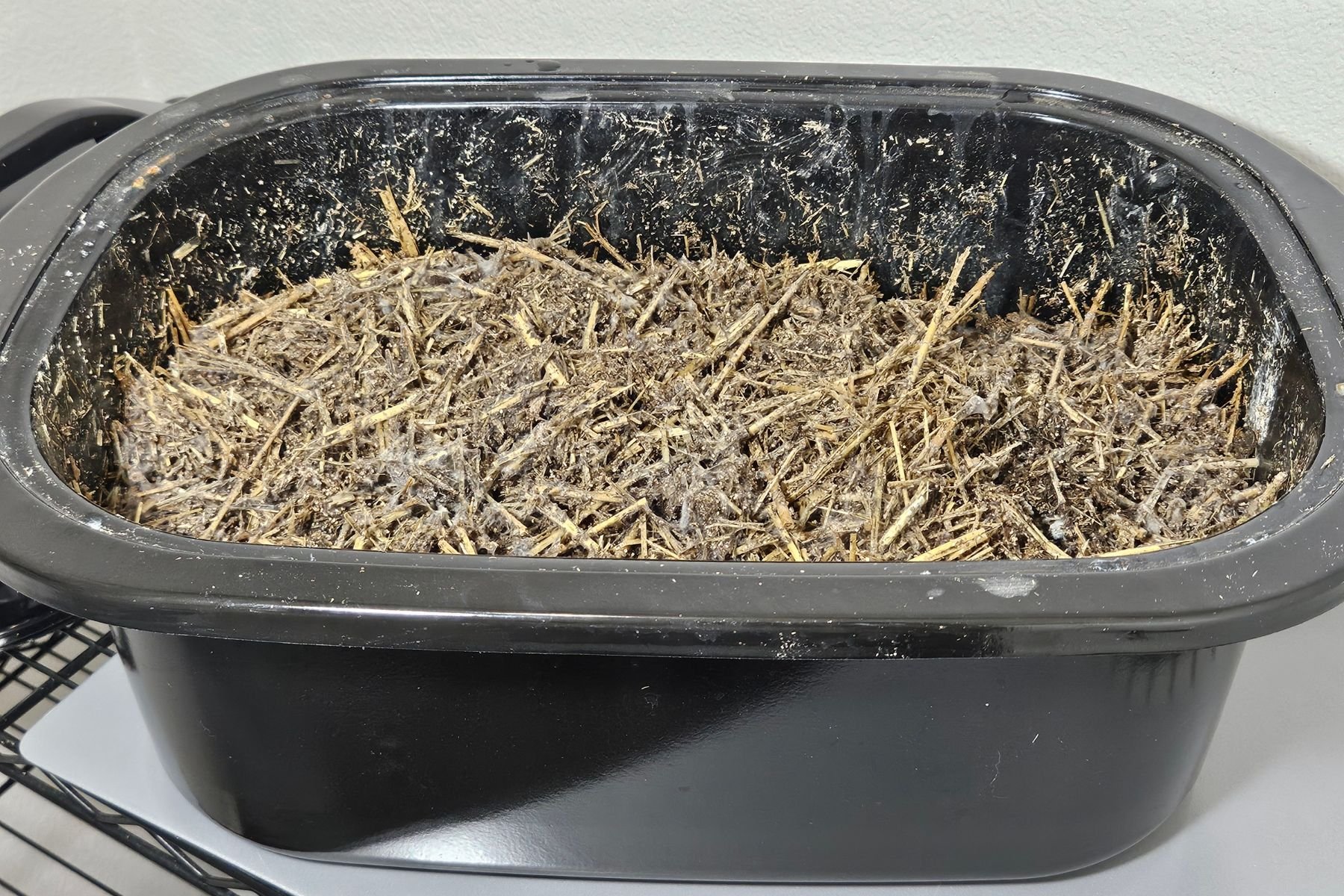
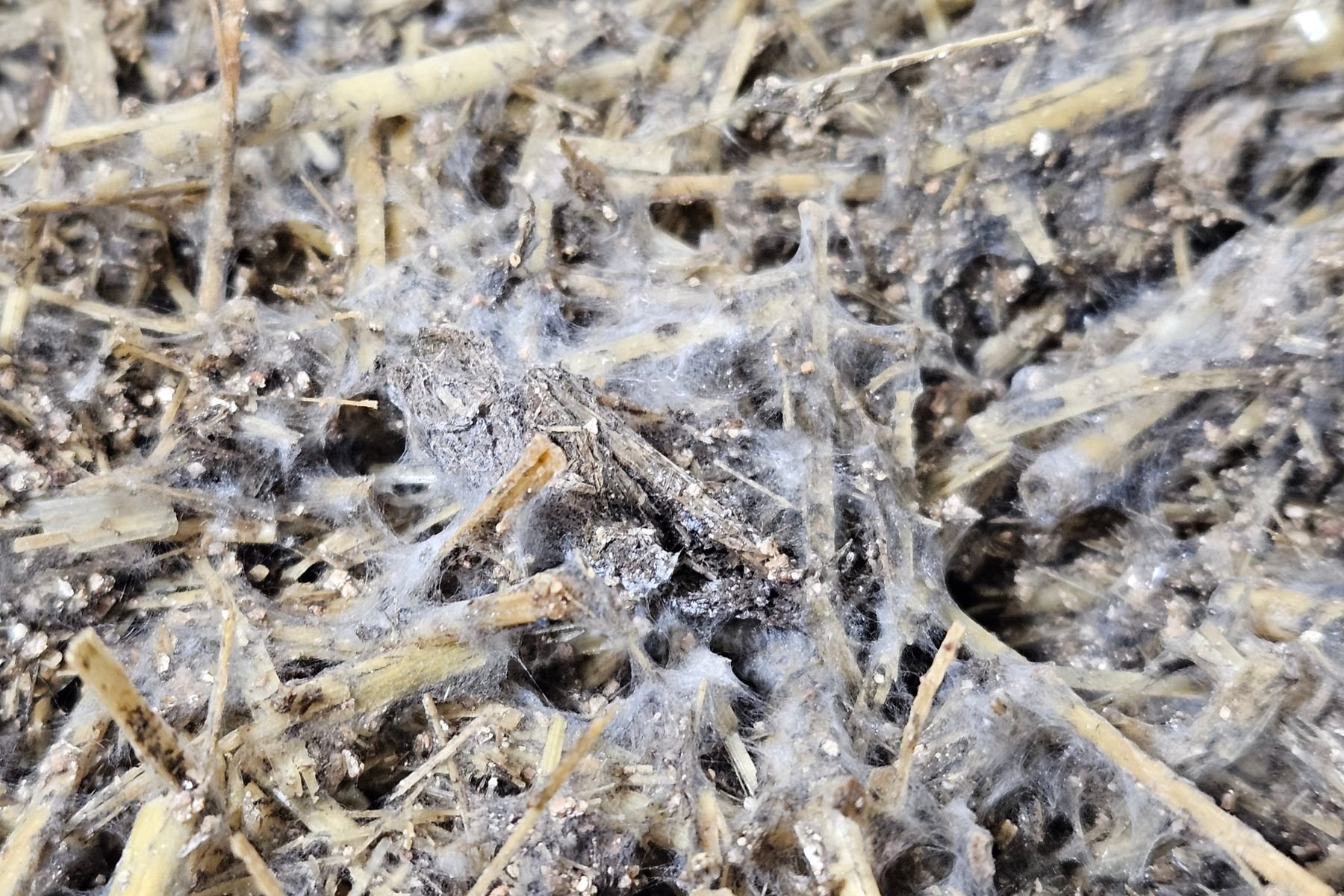
Once the substrate has cooled to room temp, it’s best to use it within 24-48 hours. The longer it sits, the more opportunity contaminants like trich have to take hold, especially in warm or stagnant environments where spores can activate quickly.
You can also give your substrate an extra boost by adding beneficial bacteria manually. A small amount of Bacillus velezensis can be added into your substrate at the same time you mix in your grain spawn. These bacteria are known for their ability to inhibit molds like Trichoderma through enzyme production, competitive exclusion, and antifungal compounds. Unlike Actinomycetes, which repopulate after pasteurization, Bacillus spores must be added manually. Once present, they can colonize quickly and help protect your substrate from being overrun.
4. Clean Work Space
While you don’t need to work in front of a flowhood, it is important that you work in a relatively still air space. A walk in closet or the corner of a room with the AC and ceiling fan turned off works great. Just make sure to wear gloves and spray your hands and work surface down with iso before handling anything.
5. Proper Fruiting Conditions
This is another area you can leverage to Pan’s advantage. Trich thrives in stagnant, overly damp environments with poor ventilation and heavy, moisture-laden air. Panaeolus, on the other hand, perform best with constant fresh air exchange, a light breathable atmosphere, and humidity with a fine particle size (not heavy mist).
To create that environment, keep your temps near 80°F so the air stays warm and light, not dense and heavy. Set your fan to run in short, frequent cycles instead of long and spaced far apart (think consistent light breezes, not occasional large gusts of wind). This helps maintain airflow without drying things out. If you’re running positive pressure (blowing air in), make sure your setup has sufficient ventilation at both the top and bottom of your tent or greenhouse.
6. Sterilize Your Trays Between Each Grow
Here is the key insight I discovered that eliminated nearly all trich: the particle size of bleach and isopropyl is too large to get into the tiny crevices of plastic where mold spores settle. Why does that matter? If you’ve ever had trich take over a tub or tray, cleaning it with hot soapy water, bleach or iso isn’t going to cut it. The only way to sterilize plastic is with heat. So how do you heat sterilize plastic trays and tubs? Run them through the dishwasher! Seriously, that’s it. Ditch the semi-hard plastic trays that warp under high heat (eg: black seedling trays), and invest in some hard plastic tubs like these or these. The other option is to use single use trays but pan mycelium eats through aluminum so I don’t recommend that.
Share the Wisdom
I know dealing with trich is one of the most frustrating parts of mushroom cultivation. We’ve all been there. If you found this post helpful and know someone else who’s struggling, pass it along. The more we share what works (and what doesn’t), the stronger the community gets. 💜